
Why Oven Temperature Alone Doesn’t Determine Pizza Quality
When it comes to baking pizza, temperature is often the first thing operators consider. Whether it’s 500°F, 550°F or higher, finding the right baking temperature is an important part of producing a great pizza.
But temperature alone doesn’t tell the whole story.
Two commercial pizza ovens operating at exactly the same temperature can produce noticeably different results. One might deliver a beautifully crisp crust with perfectly melted cheese, while another produces an uneven bake or a crust that’s too dry.
The difference often comes down to something less obvious: how heat is transferred to the pizza.
Understanding How Heat Cooks a Pizza
Every pizza oven relies on heat transfer to transform raw dough and toppings into a finished pizza. Three fundamental processes are involved: conduction, convection and radiation.
Conduction occurs when heat moves directly from the baking surface into the dough. Convection transfers heat through the movement of hot air, while radiation delivers thermal energy from heated surfaces inside the oven.
Although these processes work together, their relative contribution varies depending on the oven’s design.
For pizza operators, understanding this relationship helps explain why baking surfaces, airflow and temperature control can have such a significant impact on the finished product.
Why the Baking Surface Matters
The bottom crust is one of the defining characteristics of a great pizza. Whether customers prefer a thin, crispy base or a thicker crust with a soft interior, the way heat enters the dough plays an essential role in achieving the desired texture.
This is where conduction becomes particularly important.
When dough comes into contact with a heated baking surface, energy transfers directly into the crust. The characteristics of that surface influence how quickly and consistently the dough heats up.
Stone baking surfaces have long been associated with traditional pizza making because of their ability to store and transfer heat. When properly heated, stone provides the thermal energy needed to develop the crust while contributing to the texture customers expect from a stone-baked pizza.
This is also the principle behind Hot Rocks’ stone conveyor technology.
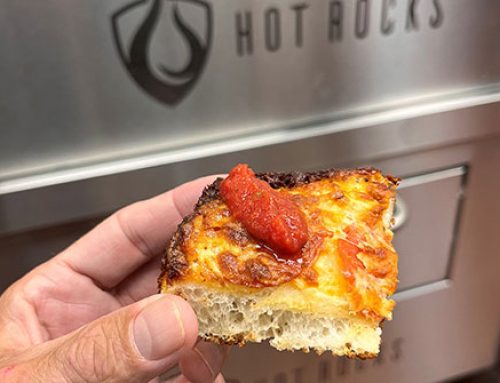
Rather than moving pizzas through the oven on a conventional metal mesh belt, Hot Rocks uses a granite stone conveyor. The pizza bakes directly on the heated stone as it travels through the baking chamber, combining direct stone contact with the continuous operation of a conveyor oven.
The result is a baking approach designed to combine authentic stone-baked characteristics with the consistency and efficiency required in commercial kitchens.
What Happens Above the Pizza Is Just as Important
While the baking surface develops the bottom crust, heat circulating inside the oven cooks the rest of the pizza.
Convection plays a major role in this process. As heated air moves around the pizza, it helps melt the cheese, cook the toppings and remove moisture during baking.
The movement and distribution of hot air are particularly important when producing pizzas continuously. An oven must maintain the appropriate baking conditions as pizzas enter and leave the chamber throughout service.
Radiant heat from heated oven surfaces also contributes to cooking and browning. Its influence depends on the oven’s design, but it is another part of the overall heat-transfer process.
Ultimately, the objective isn’t to maximize one type of heat. It’s to create the right balance between the heat reaching the bottom of the pizza and the heat cooking its toppings.
Why Two Ovens at 550°F Can Bake Differently
Imagine placing the same pizza in two different pizza ovens, both set to 550°F.
Even with identical ingredients and preparation, the results may vary.
One oven might transfer more energy through its baking surface, producing a faster-developing bottom crust. Another might rely more heavily on circulating hot air, affecting how the cheese melts and how moisture escapes from the toppings.
Differences in baking surface materials, airflow, heat distribution and temperature recovery can all influence the finished pizza.
This is why evaluating an oven based solely on its maximum temperature or BTU rating doesn’t provide a complete picture of its baking performance.
What matters is how effectively the oven delivers and maintains heat throughout the baking process.
Consistency Matters as Much as the Perfect Bake
Producing one excellent pizza is important. Producing that same pizza consistently during a busy Friday night is an entirely different challenge.
As production increases, an oven must continue delivering sufficient heat to every pizza passing through the baking chamber.
Temperature recovery, heat distribution and the stability of the baking surface become especially important under these conditions.
For multi-location operators, consistency takes on even greater significance. Customers expect the same pizza quality regardless of which restaurant they visit, who is working in the kitchen or how busy the location happens to be.
An oven that provides predictable baking conditions can help operators standardize their process, reduce the need for manual adjustments and maintain more consistent results across locations.
This is one of the reasons Hot Rocks combines its granite stone conveyor with controlled heating and adjustable baking time. Operators can fine-tune their baking process to match their pizza style while benefiting from a continuous, repeatable operation.
Look Beyond the Temperature Setting
When evaluating a commercial pizza oven, it’s worth looking beyond the numbers displayed on the control panel.
Consider how the baking surface transfers heat to the dough, how the oven cooks the toppings, and how well it maintains baking conditions during continuous production.
Most importantly, evaluate the results using your own pizza.
A well-designed oven isn’t simply one that reaches a high temperature. It’s one that delivers the right baking conditions to produce the crust, texture and consistency your customers expect.
Because great pizza isn’t just about how hot the oven gets. It’s about how the heat reaches the pizza.
Share This Story, Choose Your Platform!
Related Posts